
Safari Guide
Madikwe Green Season Safari: Why It Is One of Madikwe’s Best-Kept Secrets
Madikwe Green Season Safari: Why It Is One of Madikwe’s Best-Kept Secrets

There is a moment in Madikwe when the landscape begins to change.
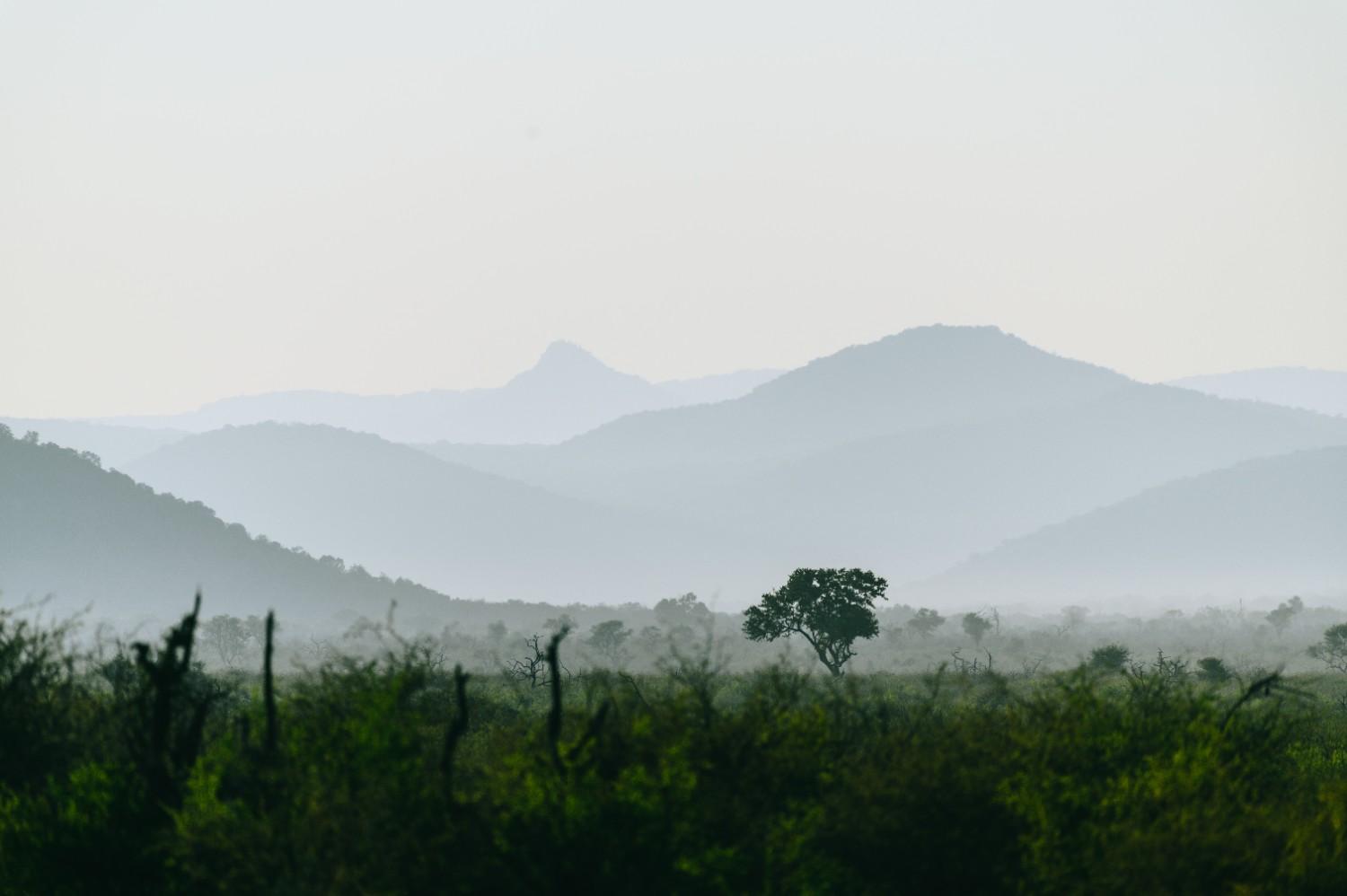
After months of dry earth, muted grasslands and open bush, the first summer rains arrive. Almost overnight, colour begins returning to the reserve. Fresh grass pushes through the soil, trees regain their leaves, seasonal water returns and the familiar winter landscape starts turning green.
This is Madikwe’s green season: the wetter summer period in Madikwe Game Reserve, when returning rain transforms the reserve into a lush, active landscape with newborn animals, prolific birdlife and a very different rhythm to game viewing.
For travellers, summer reveals an entirely different side of Madikwe. The reserve becomes greener, warmer and filled with its own wildlife stories, from newborn animals and migratory birds to dramatic skies and changing landscapes. For birders, photographers and travellers who want to experience the reserve at its most vibrant, this can be one of the most rewarding times to visit.
This guide looks at when Madikwe’s green season happens, how it changes the landscape and wildlife, what summer game drives are like, where birdwatching and photography come into their own, and what to expect from a green season stay at Jaci’s Private Lodge.
What Is Green Season in Madikwe?
Green season refers to Madikwe’s wetter summer period, generally beginning as the rains return towards the end of the year and continuing through the warmer summer months.
The transformation is not simply visual.
Rain brings new growth across the reserve. Water becomes more widely available, vegetation thickens, insect activity increases and migratory birds return. Many antelope species also give birth during the summer period, bringing a new generation of wildlife into the landscape.
The reserve feels alive in a completely different way.
For guests who have experienced Madikwe during the dry season before, returning in summer can almost feel like arriving somewhere new.
The Bush Turns Green
One of the greatest pleasures of a green season safari is simply watching Madikwe transform.
The winter palette of gold, brown and dusty red gives way to rich greens. Trees become fuller, grasses grow higher and summer clouds build above the bushveld.
Even familiar safari routes can look completely different.
The greener landscape also changes the way you experience a game drive. Wildlife appears against rich green vegetation, creating a completely different visual setting and making every sighting feel surrounded by colour, texture and life.
For photographers in particular, this can create beautiful conditions.
Fresh vegetation provides colourful backgrounds, while dark summer clouds, clear air after rainfall and changing light can completely transform the mood of a photograph.

A Season of New Life
Summer in Madikwe is also associated with new life.
As vegetation and water become more plentiful, many grazing species give birth. Young antelope begin appearing alongside their mothers and the reserve takes on a different energy.
These newborn animals are not only wonderful to observe; they also become part of the wider story of the ecosystem.
Predators remain active, and the relationship between predator and prey continues to unfold throughout the season.
No game drive can ever guarantee a particular sighting, and that unpredictability is part of safari. But during green season, the behaviour and life cycles of the animals can make each drive especially interesting.

Summer Is an Exceptional Time for Birding
Green season is one of Madikwe’s most exciting periods for birdlife, and a birder’s paradise.
More than 350 bird species have been recorded in the reserve, and summer brings additional migratory species into the region.
As insects become more abundant and vegetation flourishes, the bush can feel noticeably more active.
Colourful summer visitors join Madikwe’s resident species, while breeding activity, breeding plumage and migrant birds add even more interest for birders.
And you do not have to be a dedicated birdwatcher to appreciate it.
A flash of colour across the road, the sound of unfamiliar calls during a morning drive or the activity around a waterhole can quickly turn birdlife into one of the unexpected highlights of a summer safari.

Wildlife From a Different Perspective
Green season also rewards travellers who are happy to slow down.
Safari does not always have to mean driving from one major sighting to another.
At Jaci’s, spaces such as the Terrapin Hide allow guests to sit quietly at water level and watch wildlife arrive naturally.
Accessible through an underground tunnel, the hide places guests at eye level with the waterhole, creating opportunities to observe elephants, buffalo, birdlife and other animals from an unusually intimate perspective.
During a season when the landscape is full of activity, spending time in one place and allowing the bush to come to you can be just as rewarding as heading out in search of it.
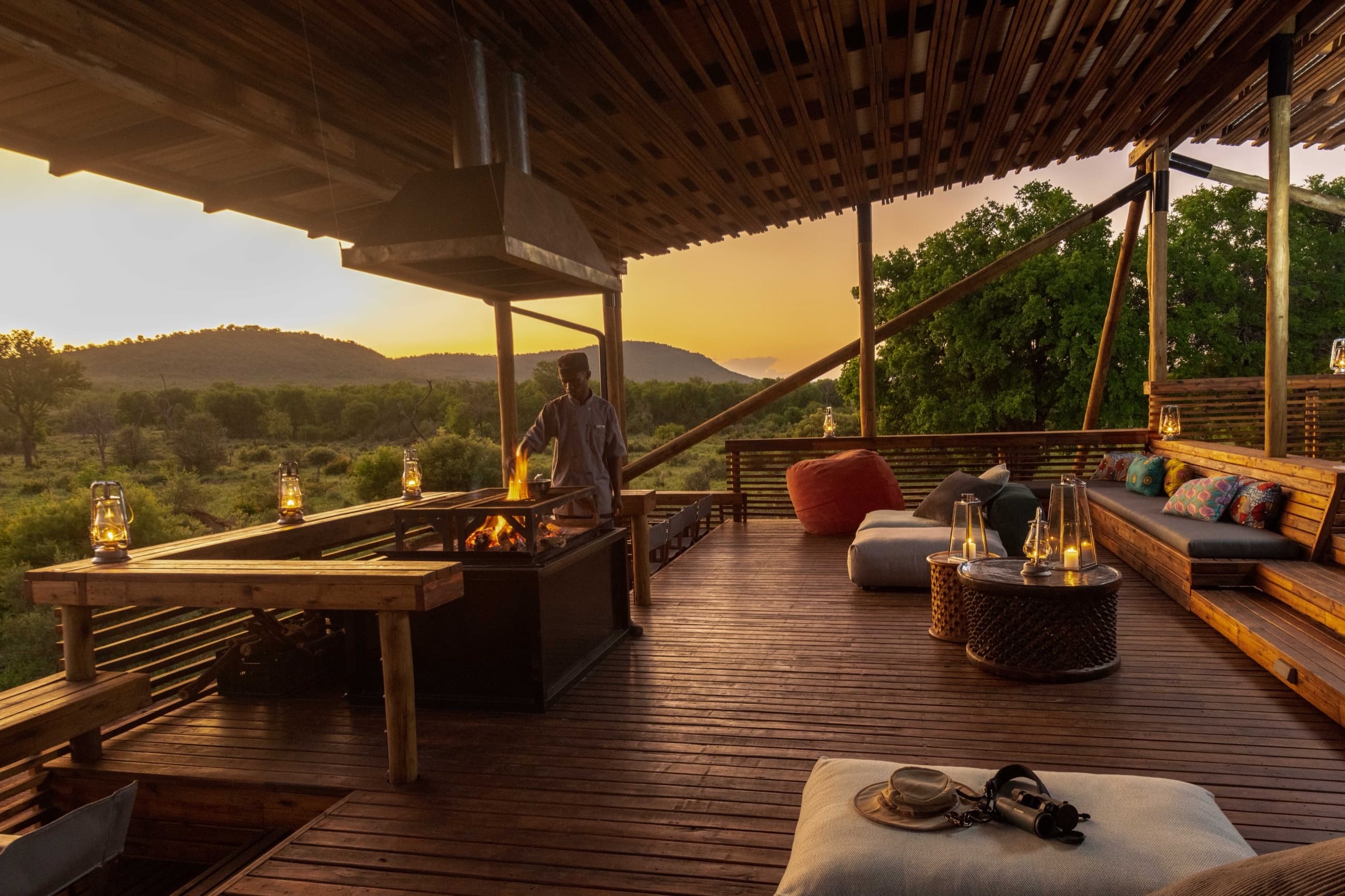
Jaci’s elevated decks and other viewing spaces offer another way to experience the changing landscape, particularly around sunrise, sunset and the dramatic skies that often accompany the summer months.
What Are Summer Game Drives Like?
Madikwe remains a year-round safari destination, and green season game drives have a character all their own.
As water returns and vegetation becomes fuller, animals move through a rich and dynamic landscape. Tracking becomes an important part of the experience, with guides using their knowledge of animal movement, tracks, sounds and behaviour to interpret what is happening around them.
Morning and afternoon drives reveal different sides of the reserve, from the cool early hours to the dramatic light and changing skies later in the day. The result is a safari experience that feels active, atmospheric and closely connected to the changing season.
Experienced guides use their intimate knowledge of animal movement, along with tracks, sounds, behaviour and signs in the landscape, to follow wildlife in summer. A sighting discovered after tracking an animal through thick summer vegetation can feel especially rewarding.
Early drives and afternoon game drives also let guests experience the reserve at different times of day, with cooler winter mornings and warmer summer starts, when wildlife is often more active.
And What About the Rain?
Summer is Madikwe’s rainy season, but that does not necessarily mean days of continuous rain. The wettest period is usually from December to February.
Rainfall often comes in the form of dramatic afternoon thunderstorms.
They can arrive quickly, change the atmosphere of the bush completely and then pass, leaving behind cooler air, refreshed vegetation and remarkable skies.
For many guests, these storms become part of the experience.
Watching clouds build across the reserve, hearing distant thunder or returning from a drive through a landscape that has just been washed by rain can be incredibly atmospheric.
Green season days are generally warm to hot, with summer daytime temperatures often reaching the low 30s. A light waterproof layer is useful, but summer weather should be seen as part of the experience rather than something that interrupts it.
What Makes Green Season Game Viewing Different?
Green season changes the way wildlife is experienced across Madikwe. With more water available and vegetation becoming fuller, animals can move more widely through the reserve, giving every game drive its own rhythm.
This is where the knowledge of experienced guides becomes especially valuable. Tracks, calls, behaviour and signs in the landscape all help reveal what is happening around you, and discovering wildlife through this process can make a sighting even more rewarding.
Newborn animals, migratory birds, lush scenery, dramatic weather and changing animal behaviour all become part of the experience, giving green season its own distinctive safari character.
Newborn animals, migratory birds, green landscapes, dramatic weather and different animal behaviour all become part of the story.
For returning safari travellers especially, that contrast can be one of the season’s greatest attractions.
Green Season Through a Camera Lens
For photographers, summer provides a completely different visual language.
Wildlife stands against green rather than dry backgrounds. Clouds add depth to the sky. Rain removes dust from the atmosphere. Reflections begin appearing around water and colourful birds become part of the landscape.
The light can change quickly before and after a storm.
A scene that looks bright and tropical one moment can become dark and dramatic the next.
Even photographers who have visited Madikwe before may find themselves seeing familiar species and landscapes in a completely new way.
Who Is a Green Season Safari Best For?
Green season can be especially rewarding for travellers who:
- enjoy birding and summer wildlife
- are interested in photography
- enjoy dramatic landscapes and changing weather
- want to see the reserve at its greenest
- appreciate the wider ecosystem and seasonal changes
- are planning a family safari during Madikwe’s greener summer months
For guests who want to experience Madikwe as a living, changing environment, green season offers a rich and memorable way to discover the reserve.
For first-time safari travellers who have dreamed specifically of the easiest possible Big Five viewing, the dry season may still be the more obvious choice.
But for guests interested in experiencing Madikwe as a living, changing environment, green season deserves far more attention than it often receives.
Experience Green Season at Jaci’s
At Jaci’s Private Lodge, summer can be experienced in many different ways.
Head into the reserve on morning and afternoon game drives. Spend time watching wildlife from the Terrapin Hide. Look for returning migratory birds. Enjoy the green landscape from the lodge’s decks or simply watch an afternoon storm build across Madikwe.
Green season is not an alternative version of the dry-season safari.
It is its own experience.
The bush is fuller. The skies are more dramatic. New life appears across the reserve. Birdsong changes. Wildlife moves differently.
And for travellers willing to experience safari beyond the traditional winter months, it can reveal one of Madikwe’s most beautiful sides.
Perhaps that is why green season remains one of Madikwe’s best-kept secrets: a season that offers a completely different perspective on the reserve and its wildlife.
Frequently Asked Questions About Madikwe Green Season
When is green season in Madikwe?
Madikwe’s greener summer period generally begins as seasonal rains return towards the end of the year and continues through the warmer summer months. Conditions vary from year to year depending on rainfall.
Is November a good time to visit Madikwe?
November is an exciting transition into green season. Summer rains begin transforming the landscape, temperatures become warmer, migratory birds return and newborn wildlife may begin appearing. It is a beautiful time to experience Madikwe as the reserve becomes greener, more colourful and increasingly active.
Can you still see the Big Five during green season?
Yes. Madikwe remains a Big Five reserve throughout the year, home to lion, leopard, elephant, buffalo and rhino. Green season brings changing landscapes and wildlife movement, while experienced guides use their knowledge of tracks, behaviour and animal activity to find and interpret sightings. Madikwe is also known for its elephant herds and African wild dogs, adding even more variety to a summer safari.
Is green season good for birdwatching?
Yes. Summer is particularly rewarding for birding because migratory species join Madikwe’s resident birdlife and increased vegetation and insect activity support a very active ecosystem.
Does it rain all day during summer in Madikwe?
Not necessarily. Summer rainfall often arrives as showers or thunderstorms in the late afternoons rather than continuous all-day rain, although conditions naturally vary.
Is green season good for safari photography?
It can be excellent. Green vegetation, dramatic clouds, clearer air after rain, colourful birdlife and newborn wildlife all create photographic opportunities that differ significantly from the dry season.
Discover Madikwe in Green Season
Every season in Madikwe tells a different story.
If you would like to experience the reserve during its greener summer months, speak to the Jaci’s team about planning your stay in madikwe game reserve, a roughly 75,000-hectare reserve proclaimed in 1991 and restocked with more than 8,000 animals, and discovering a side of Madikwe that many safari travellers never get to see. To start planning, contact our friendly reservations team with your preferred travel dates, or enquire online.
Keep reading
More from the Journal
Jaci’s Stories
From Quarry to Wetland: The Story Behind Jaci’s Terrapin Hide
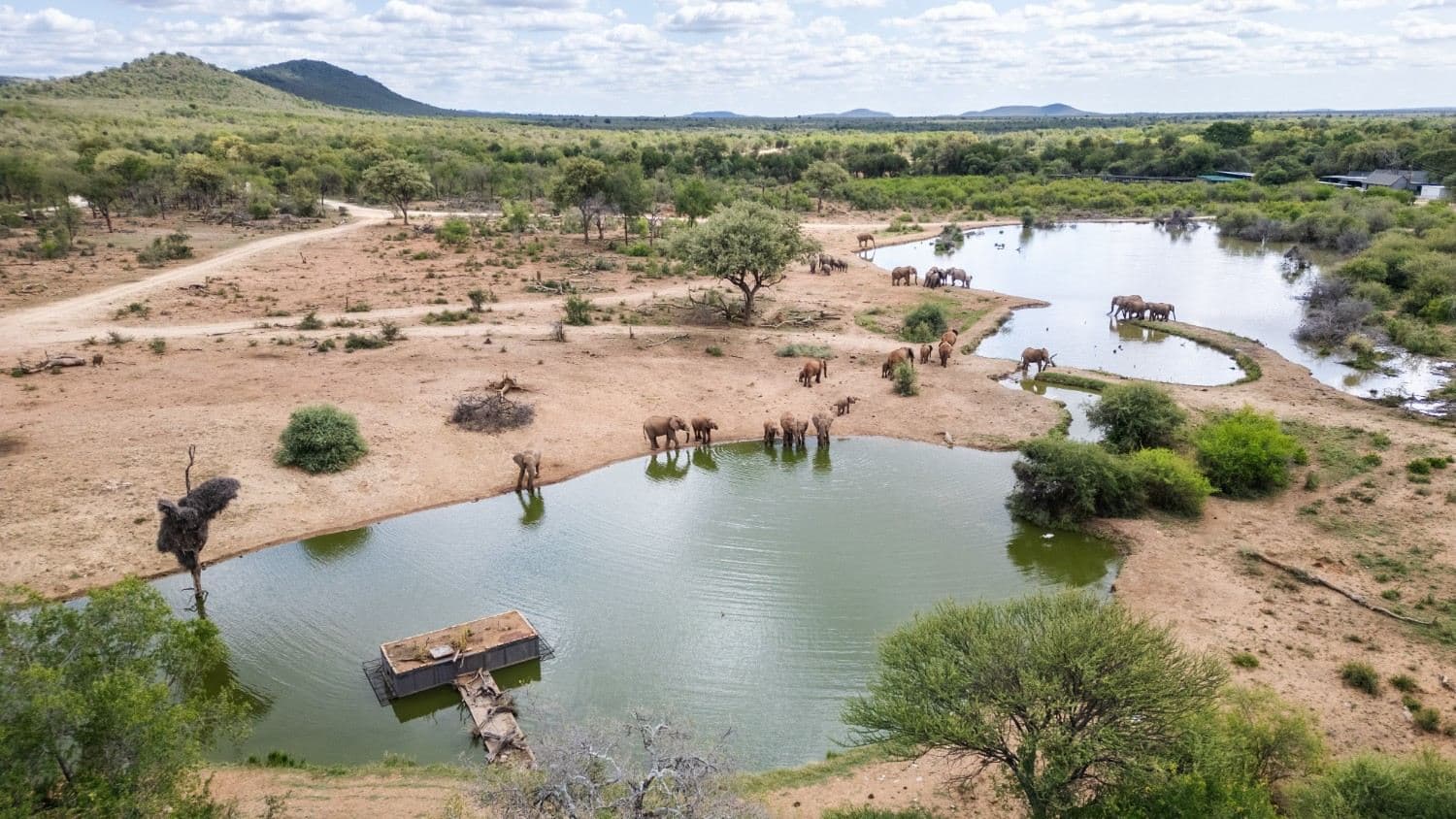
Some of the most memorable places in the bush begin with an unexpected idea. At Jaci’s Private Lodge in Madikwe Game Reserve, the story behind the Terrapin Hide began with something far less glamorous: an old quarry. Today, that former quarry has become a living wetland and the setting for one of Jaci’s most distinctive … Read more
Awards & Recognition
Jaci’s Private Lodge Wins 4 LUXE Global Awards 2026
Jaci’s Private Lodge Celebrates Four Wins at the 2026 LUXE Global Awards We’re proud to share an exciting milestone for Jaci’s Private Lodge: four honors at the 2026 LUXE Global Awards, recognizing our approach to safari hospitality and the experience we continue to create in the heart of Madikwe Game Reserve. Jaci’s Private Lodge was … Read more
Jaci’s Stories
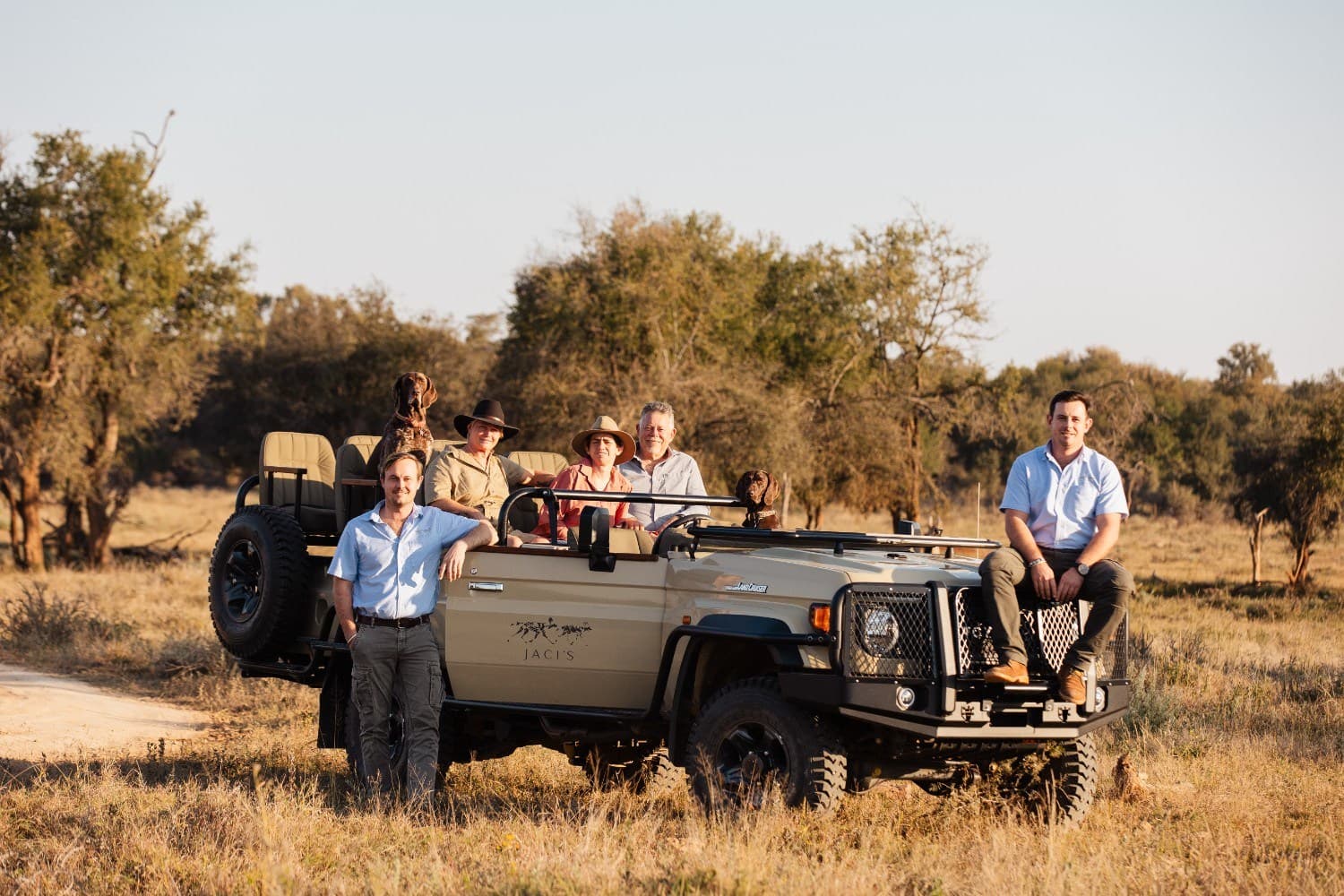
The Story of Jaci’s Private Lodge: Family, People and 26 Years in Madikwe game reserve
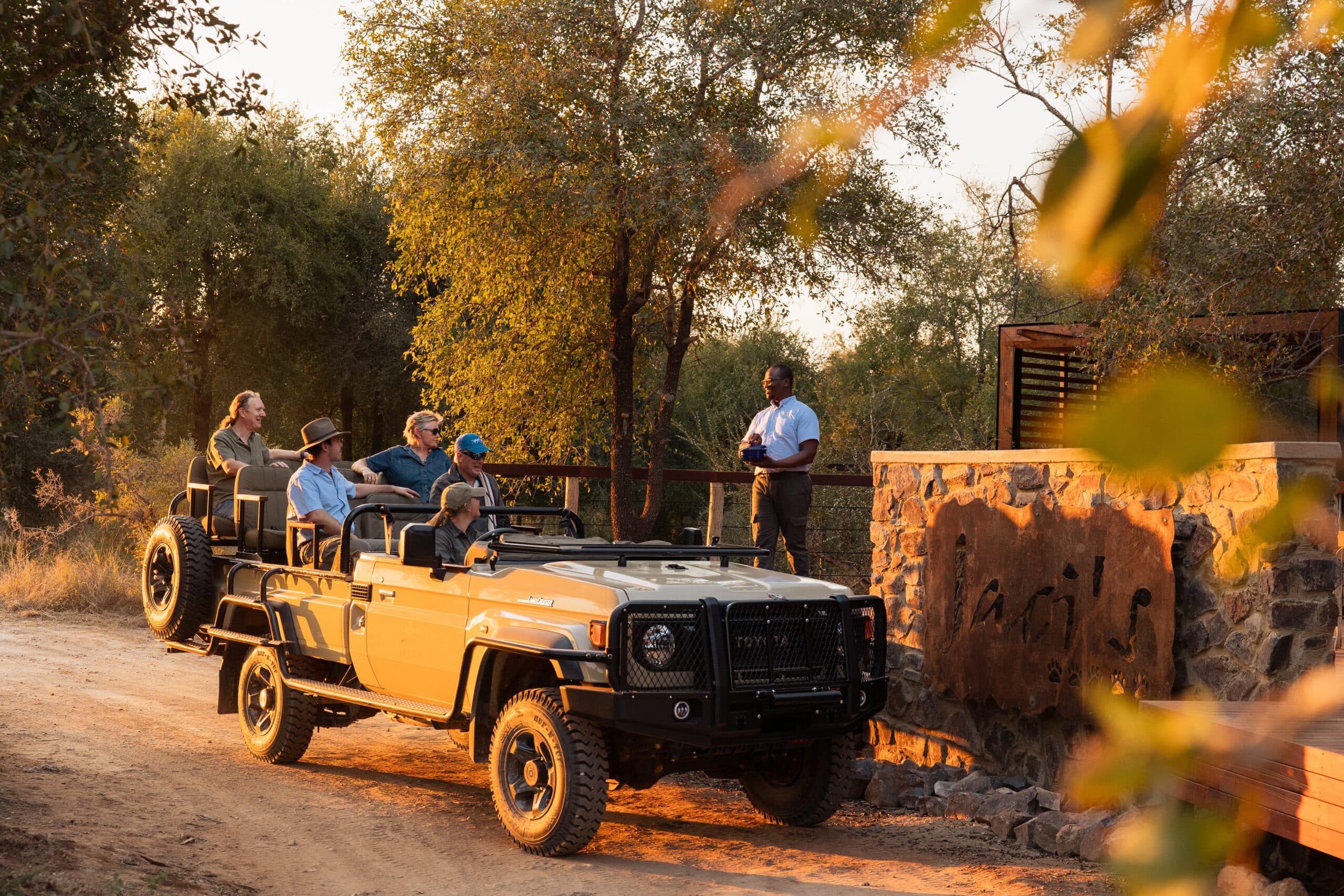
The Story of Jaci’s Private Lodge: Family, People and 26 Years in Madikwe game reserve The history of Jaci’s Private Lodge begins long before this family-run safari lodge became part of the Madikwe landscape. Jan and Jaci first met while living and working on Bazaruto Island, surrounded by the ocean, wild places and the kind … Read more
Experience Madikwe with us
Come for the wildlife, stay for the warmth, and leave with a deeper connection to Madikwe.